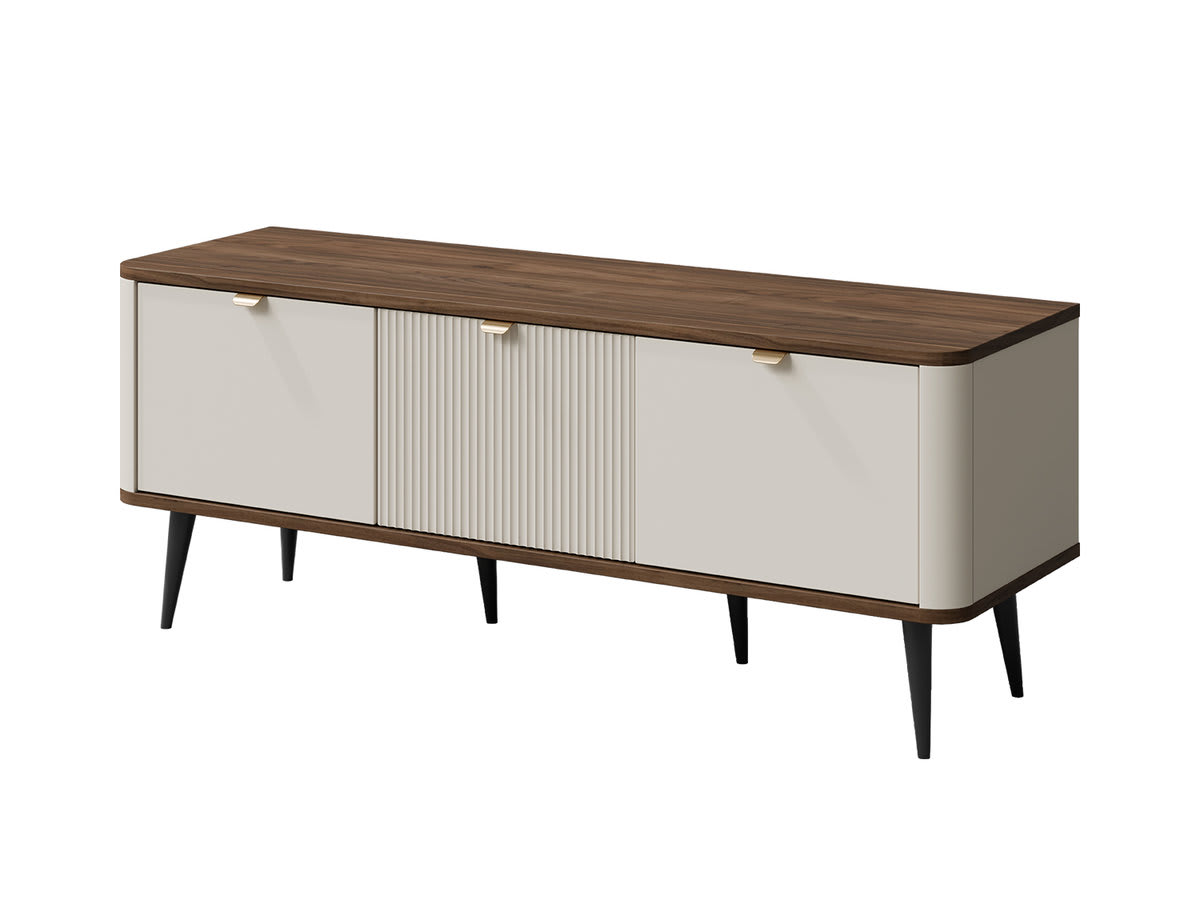
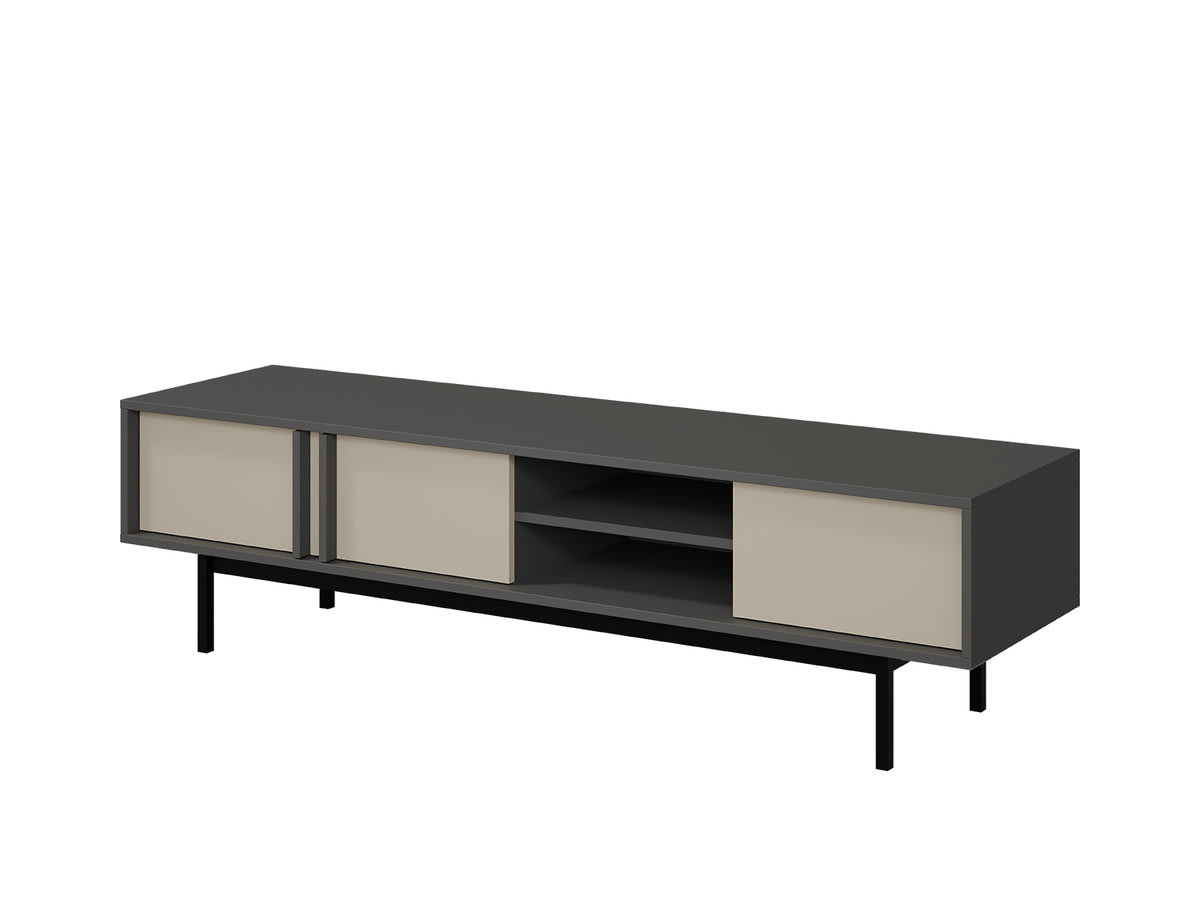
TV stand: width, niches and where to put the wires
The cabinet is usually chosen diagonally across the TV. That's only half right.
The TV stand is an object that is mistaken twice: first with the width, then with what is inside. Both errors are visible only when everything is already standing.
Width: level is not enough
The cabinet should be at least 15-20 cm wider than the TV on each side. If it is level, the structure looks wobbly even when it is absolutely stable - the eye reads it as "something is about to fall."
Ready guidelines: for 43″ (95 cm) take a cabinet from 120 cm, for 55″ (123 cm) — from 140 cm, for 65″ (145 cm) — from 170 cm.
Niche height: measure appliances, not shelves
- —Most TV sets require 8–10 cm of open niche height
- —Soundbars — from 8 to 15 cm, depending on the model
- —A game console is usually even taller and needs ventilation, not just height
The door and remote control are closed
A solid door without a glass insert blocks the infrared signal: the set-top box behind it will stop responding to the remote control. This is the detail that is mentioned on the second evening.
If the equipment must be hidden, look for models with glass inserts or leave it on an open shelf.
Wires
Check whether there are holes in the back wall for cables. Without them, the wires have to be run from the side, and all the neatness of the cabinet goes to waste.
The suspended model visually relieves the room and simplifies cleaning, but requires a strong wall and proper fastening. Legs are more versatile: such a cabinet can be rearranged.