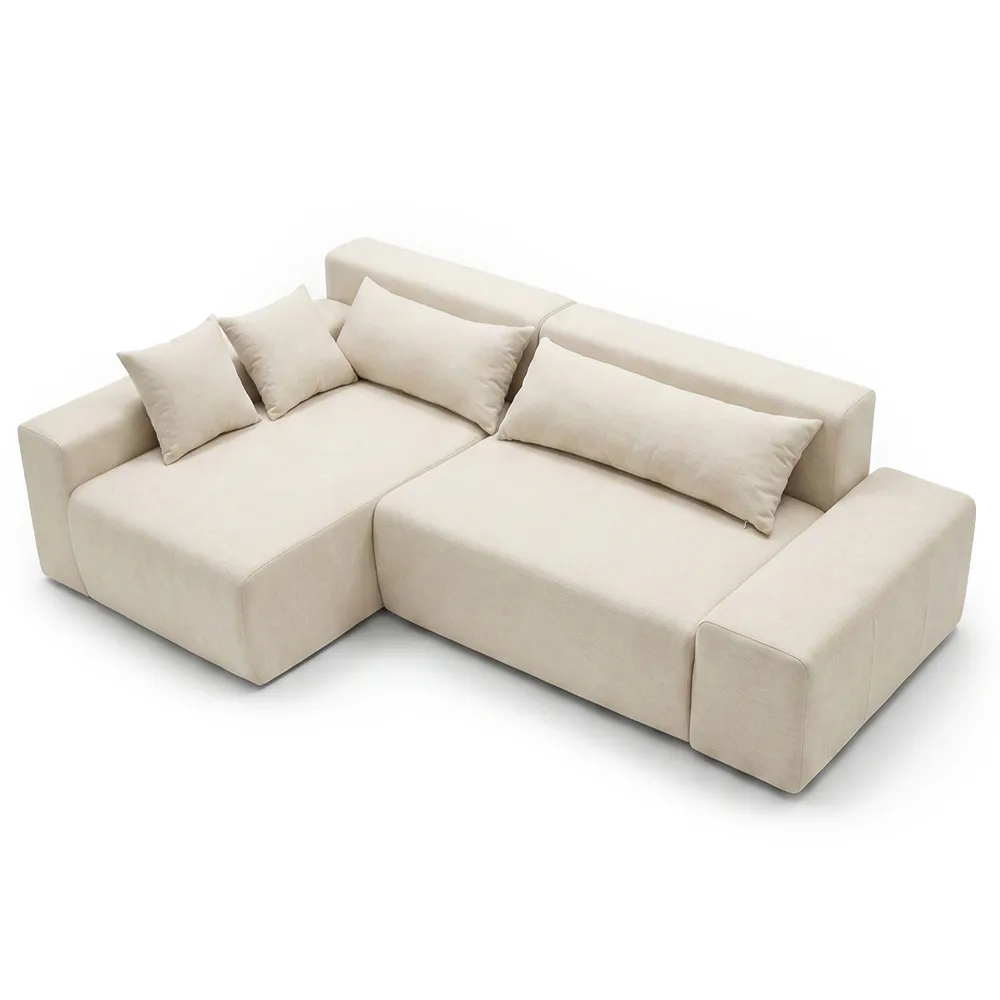
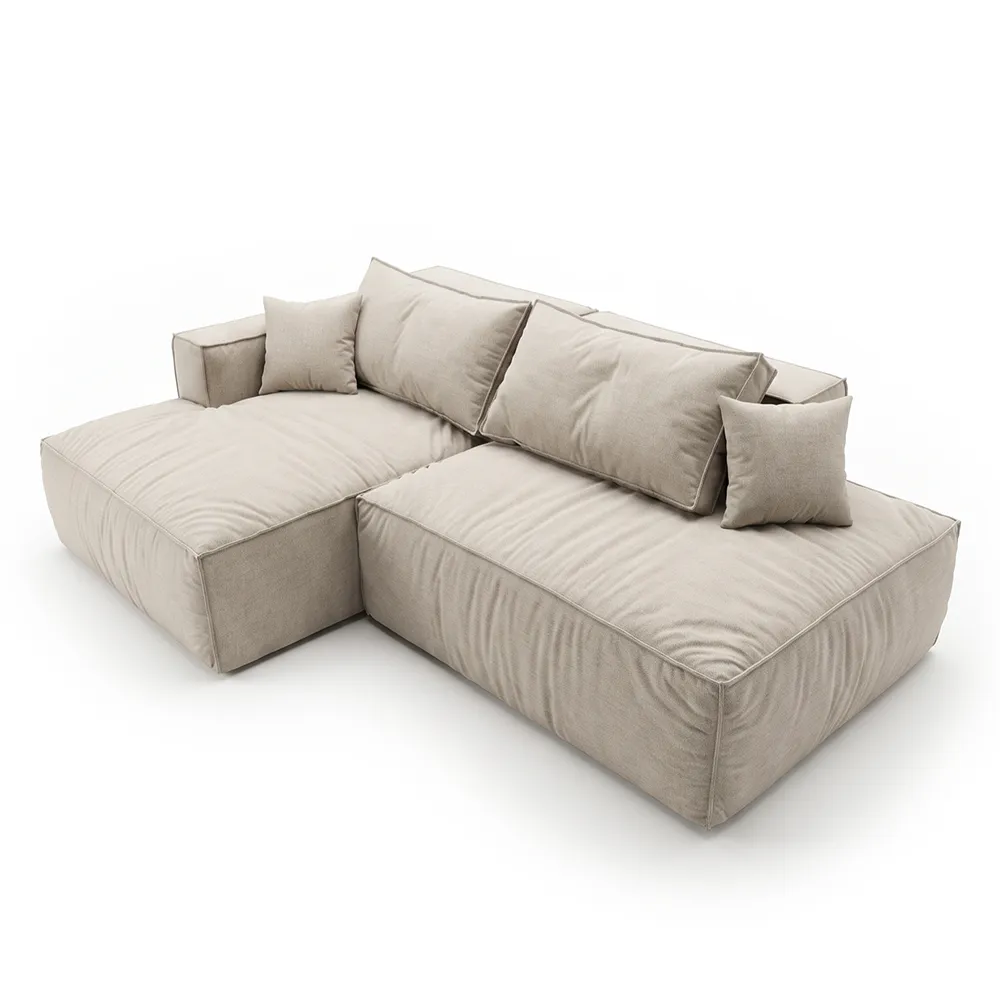
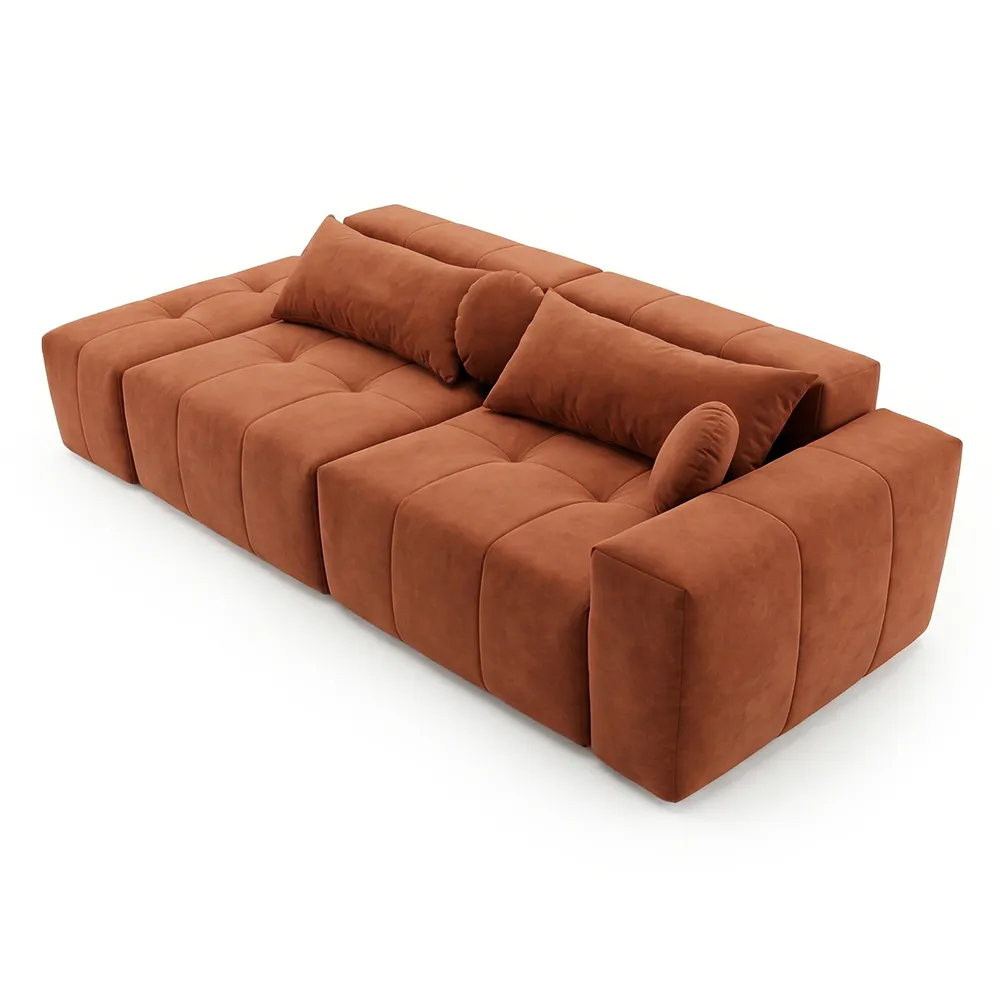
Spring or springless sofa: which to choose and how they differ
Many “springless” sofas do have springs — just not where people look for them. What is under you, and how to choose a sofa for the way you use it.
There is no clear winner. A spring unit and polyurethane foam behave differently under weight, and the choice depends on how you will use the sofa: to sit on, or to sleep on every night alone or as a couple.
Before comparing, know one thing: many sofas sold as “springless” do have springs. They sit at the base of the seat.
What “springless” means
In shop descriptions the word means there is no spring unit in the soft layer: the seat is built from polyurethane foam (PU foam, often just called “foam”).
Under that foam there are often sinuous springs — steel wire bent into waves and stretched across the frame. They work as a springy base the filling rests on. So a “springless” sofa often sits on springs; they are just underneath the seat.
Three seat designs
- —Foam on sinuous springs — layers of polyurethane foam on a springy steel base
- —Interconnected spring unit (also called Bonnell) — the springs are wired together
- —Pocket spring unit — each spring sits in its own fabric pocket and is not attached to its neighbours
In an interconnected unit the springs pull on each other: press one and its neighbours give too. Hence the “hammock effect” or “wave effect” that buying guides mention. At the same time, a laboratory study of upholstered furniture found that a Bonnell unit responds evenly and linearly to load across the whole range, and called that an advantage over a foam core.
A pocket spring unit gives only where it is pressed, so a person moving next to you is felt less than on an interconnected unit.
The type of spring unit strongly affects how soft the seat is. But without filling layers on top, a spring unit is not suitable for upholstered furniture, so those layers are always there.
Sinuous springs follow the shape of the body less closely than a spring unit, so the foam on top does that job.
Density and firmness are different things
Dense foam can be soft and light foam can be firm: these are two independent properties. A US industry guide for furniture makers lists confusing them first among common mistakes.
For PU foam, density is the main indicator of durability: the higher it is, the less height and firmness the foam loses under repeated load. The US Polyurethane Foam Association recommends about 29 kg/m³ or more for seats.
A layered seat works like this: a layer of denser foam gives support, and a softer one on top decides how the seat feels the moment you sit down.
How to read foam grades
If a description lists a grade such as HR3530, read it like this:
- —The letters are the foam type: HR is high-resilience, ST is standard
- —The first two digits are density: 35 kg/m³
- —The last two are firmness in tenths of a kilopascal: 30 means 3.0 kPa
The rule comes from a foam maker’s data sheets, and retail listings sometimes get the grade wrong. If the numbers don’t match the description, check with the seller.
The letters HR describe how resilient the surface is, but on their own they do not guarantee durability. When comparing two foam sofas, look at density first.
If you choose a spring unit
Apart from that laboratory measurement on samples, we found no comparison of spring units with foam on sinuous springs specifically for sofas. What is known is the difference between the units themselves:
- —If you are choosing a spring unit and sleep as a couple every night, weigh differently or one of you often turns over, take a pocket spring unit. It gives only under the person lying on it, so a partner’s movement is felt less. That is how it is described for mattresses
- —If you like a seat that springs back in proportion to the load, choose an interconnected unit: that is how it behaves
If one person will sleep on the sofa, or it is mainly for sitting, compare the density of the main foam layer and how many layers the seat is built from. Ask the seller and check it in the showroom.
What is inside our sofas
In every model in our catalogue the seat is high-resilience polyurethane foam laid in layers, firmer at the bottom and softer on top. Under it, in every module, are steel sinuous springs. The back cushions are filled with hollow fibre. None of the models has a spring unit.
Seat firmness is medium in every model; the range has no firm seat. If a firm seat is what you need, it is better to know that before buying.
Advice we could not confirm
Three claims often appear in articles on this topic, but we found no independent data to back them.
- —Lifespan in years. Some articles give foam 5–7 years, others more than 10, and springs 8 to 15. They give no method. Standards measure something else: how much height and firmness foam loses after thousands of load cycles
- —“Springs are for heavier people.” The kilograms differ from source to source and mean different things: sometimes a weight threshold, sometimes the maximum load of a unit, and one shop recommends foam precisely for 140 kg. For foam, what matters here is density
- —“Springs collect dust”, or the reverse. Medical sources say dust mites live in upholstered furniture in general and do not compare fillings. They also advise keeping indoor humidity below 50%
How to check in the showroom
- —Sit where you will sit every day and stay there for a few minutes
- —If the sofa is for sleeping, unfold it and lie on it for a minute the way you sleep
- —Ask what is under the filling: sinuous springs, a spring unit or something else
- —Ask for the density or grade of the main foam layer
- —Ask the same questions about both sofas, then the answers can be compared