Dining table: top, frame and extended length
A table is a table top, a frame and, sometimes, a mechanism. Each part solves its task.
The dining table lives longer than the kitchen around it, so choosing it according to the color of the set is the shortest way to replace it in five years. It is worth looking at the material and the mechanism.
The tabletop decides almost everything
- —Ceramics - withstands a hot pan without a stand and a knife without a board, does not absorb moisture; heavier and more expensive
- —Tempered glass is lighter and cheaper, cleans well, but shows fingerprints
- —Laminated chipboard is the most affordable; it deteriorates first precisely at the joints, where moisture enters
Frame
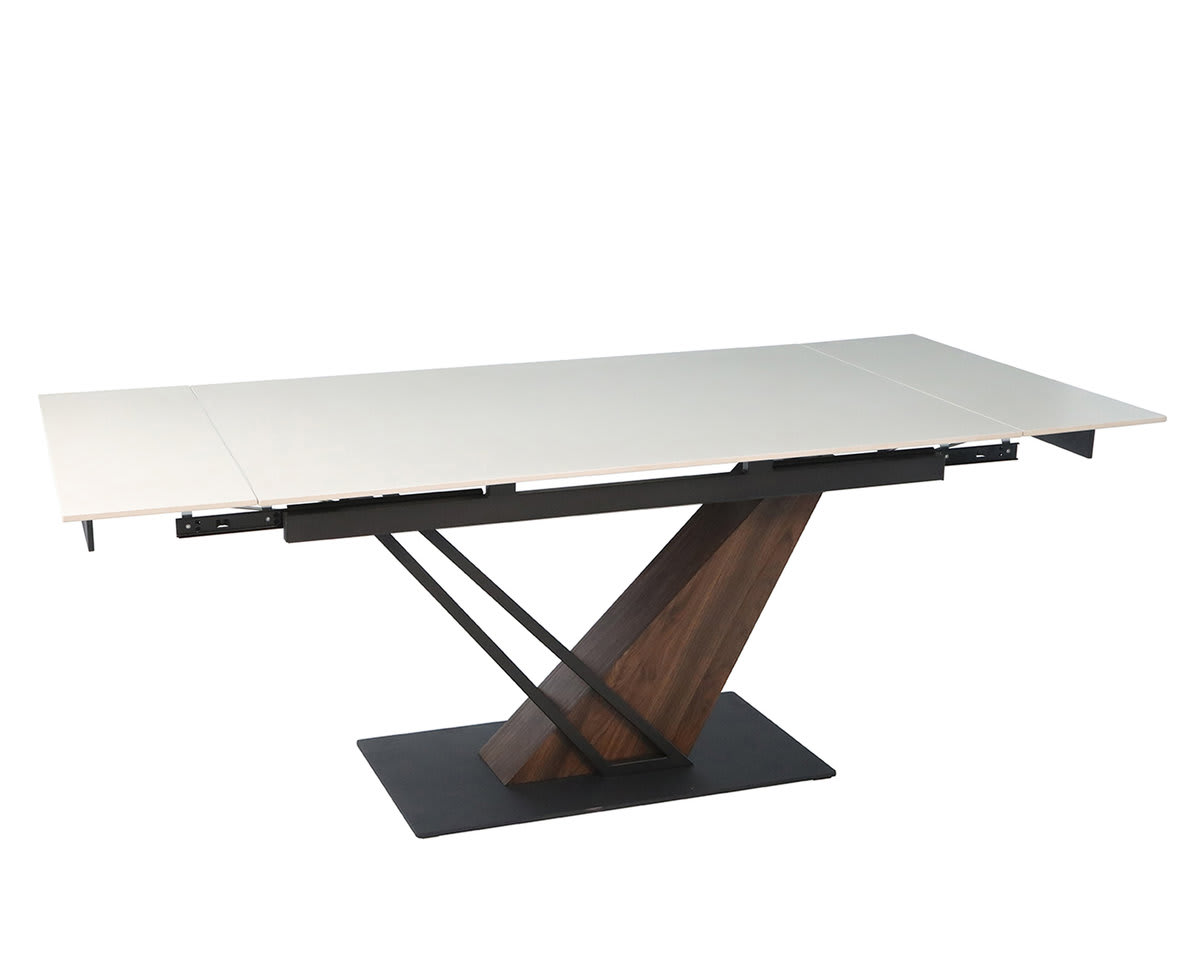
The metal frame gives thin supports and does not interfere with the legs; wooden is more massive in appearance and warmer; the combination of MDF with metal is a compromise for the price.
It is a separate line in the characteristics. It should be looked at together with the tabletop: a heavy ceramic tabletop on a light frame is not the most stable combination.
A folding mechanism and a number that everyone forgets
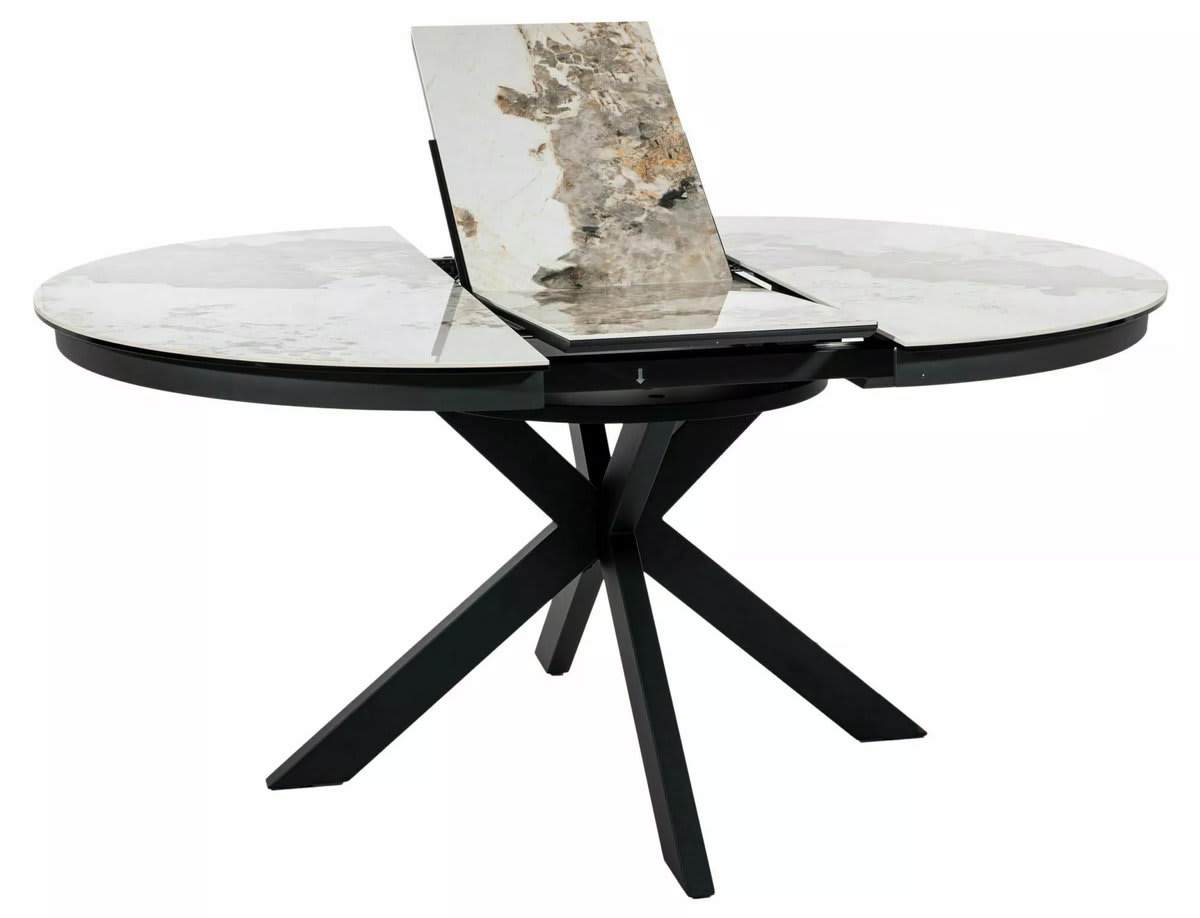
The mechanism adds an insert to the tabletop. Exactly how much is in the specifications in a separate line "Length in unfolded form", and this is the most important number for someone who sets the table for the holidays.
You need to check not the table itself, but the place around it: take the length in the unfolded form and add 70 cm on each side - this is the chair plus the passage behind it. If this is not in the room, the table will not be physically placed anywhere.
Form
A round table has no corners to cling to, and it is easier to talk behind it: there is no "space at the end". Rectangular is more efficient along the wall and accommodates more in the same area.
The guideline for the number of seats is 60 cm of perimeter per person. For round, this means: 100 cm in diameter - four places, 120 cm - five, 140 cm - six.